Ideas brought into
the physical world.
Interactive experiences created at Reo-Tek for an agriculture-focused museum, from ecological learning to speculative farming environments.
At Reo-Tek, my contribution went beyond interface screens. I worked across concept development, 3D design, UI/UX, visitor interactions, Unity/C# work and on-site installation—connecting what visitors see with how they move, explore and learn.
The museum experiences cover the insects of Anatolia, biological control, bacteria, gesture-led play and imagined agricultural life on Mars. Each asks a different kind of participation.
- CompanyReo-Tek
- Role3D & Interaction Design
- ContextAgriculture Museum
- ContributionConcept · UI/UX · 3D · Interaction · Installation
- OutputInteractive exhibits & visitor-facing experiences
Designed for
real people, in real space.
The work extends beyond the screen into the physical exhibit and the way visitors engage with it on site.
The installation is part of the design.
Working on site meant translating digital ideas into visitor-facing physical experiences. I was directly involved in the installation process—not only in their visual and interaction design.
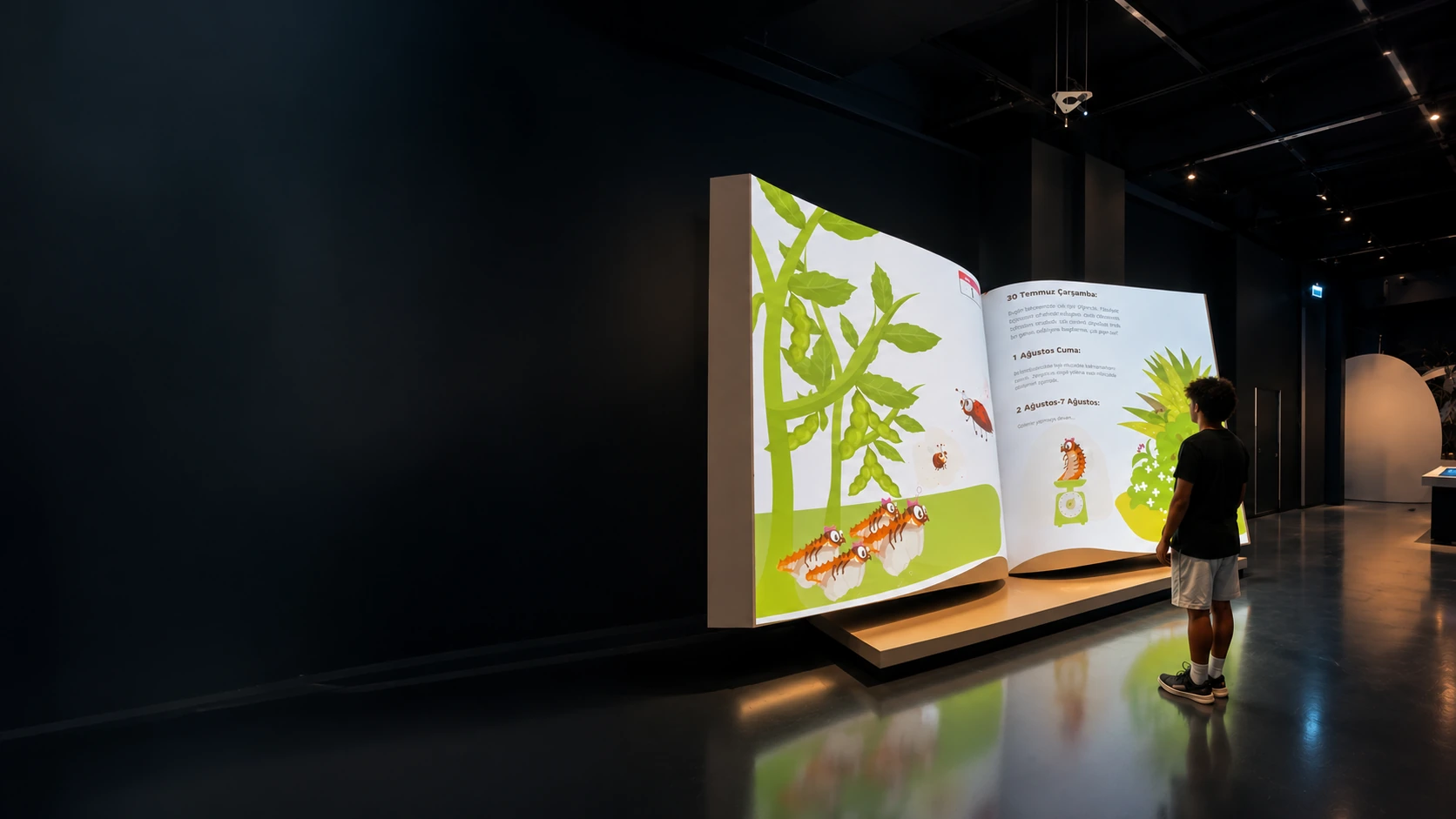
This footage documents a large-format, illustrated exhibit being used by a visitor. It shows the project in its intended context: a shared, spatial experience.
Interaction in the real space.
Visitors encountering the installations in person—from large-format displays to hands-on participation.
The living map
of Anatolia.
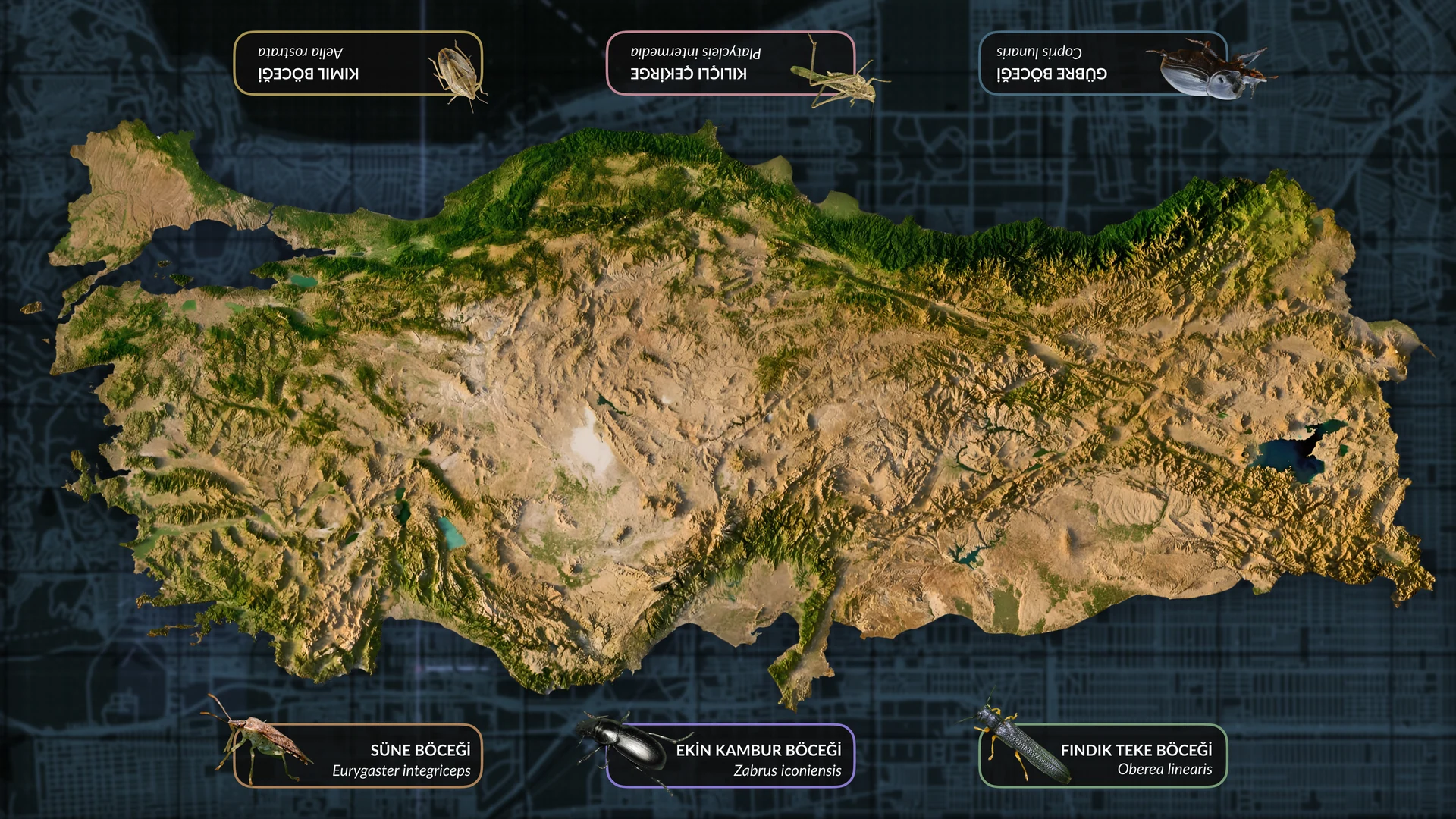
A visual way to explore regional insects, ecosystems and the diversity of species through an interactive map.
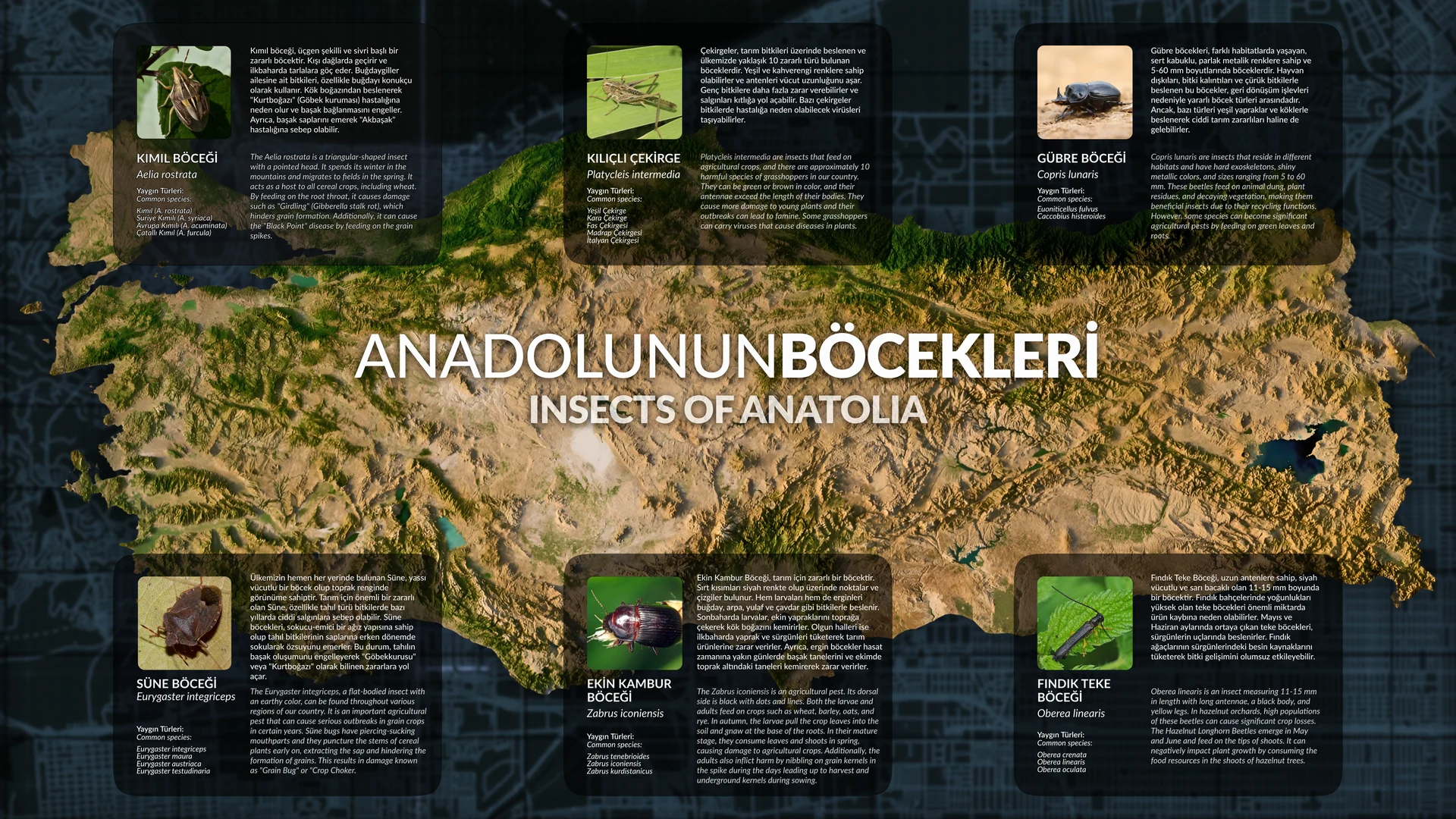
Biodiversity as an experience.
Geographic context and detailed species information share the same visual field. Visitors can move between the wider ecological picture and individual organisms without leaving the exhibit’s narrative.
The screen brings natural-history content into an accessible, spatially structured interface.
Invisible systems.
Playable ideas.
Ecology and microbiology translated into comprehensible information and game-oriented interactions.
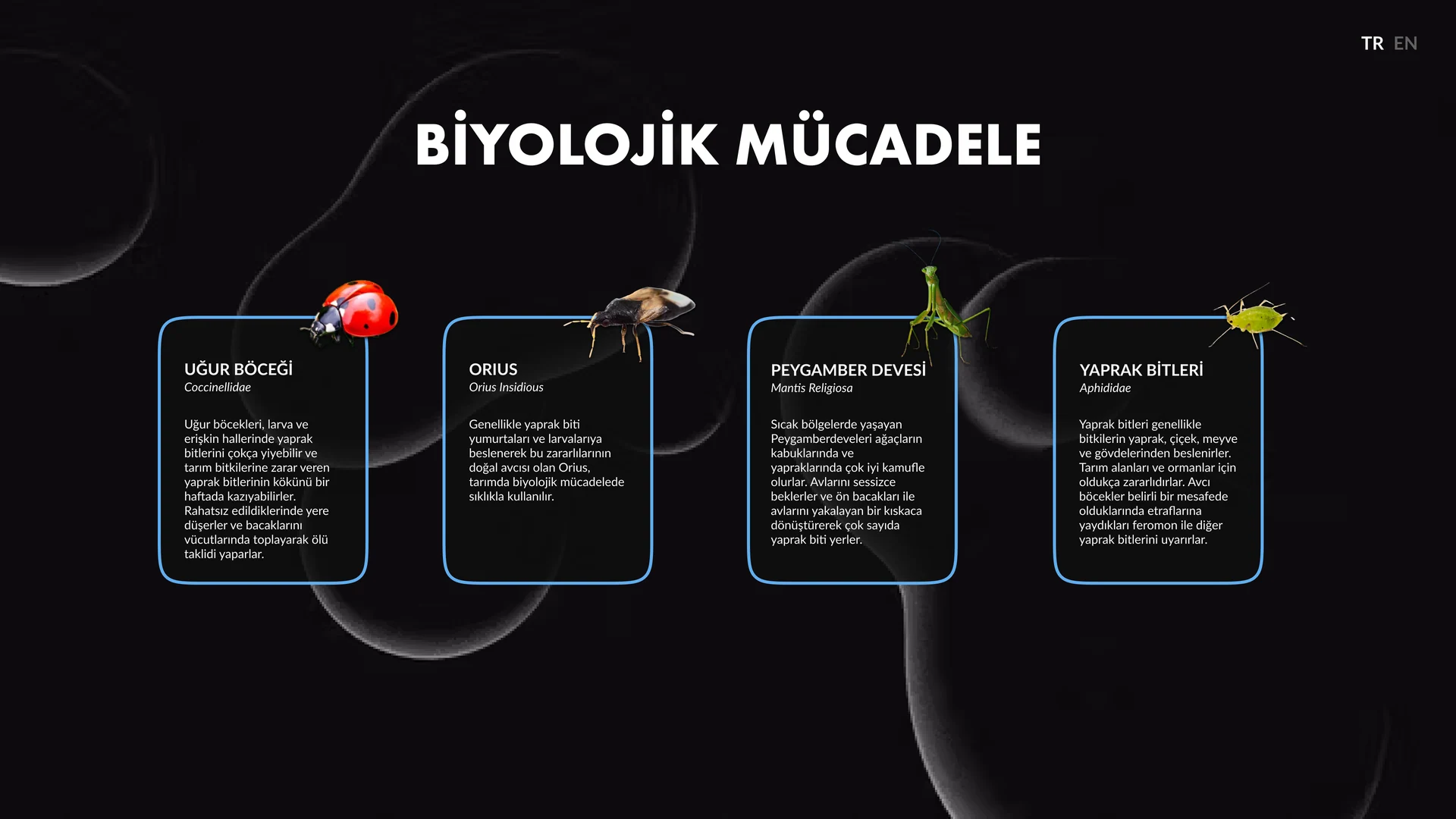
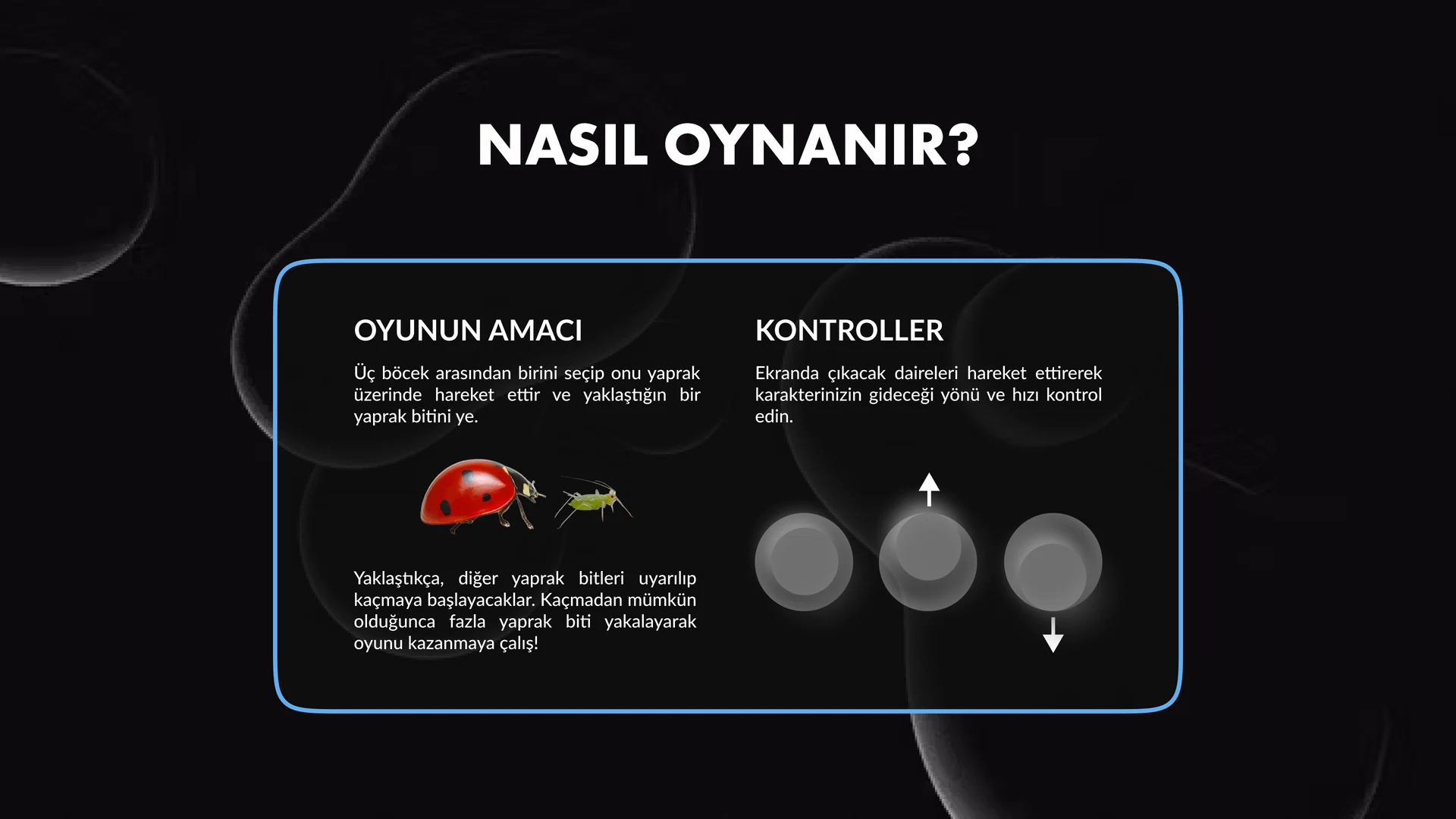
Making microscopic life legible.
The bacterial defense experience distinguishes beneficial from harmful bacteria, using clear visual grouping and illustrations to turn an abstract scientific subject into an approachable interaction.
Alongside biological control, it builds an accessible path into organisms and systems visitors rarely encounter firsthand.
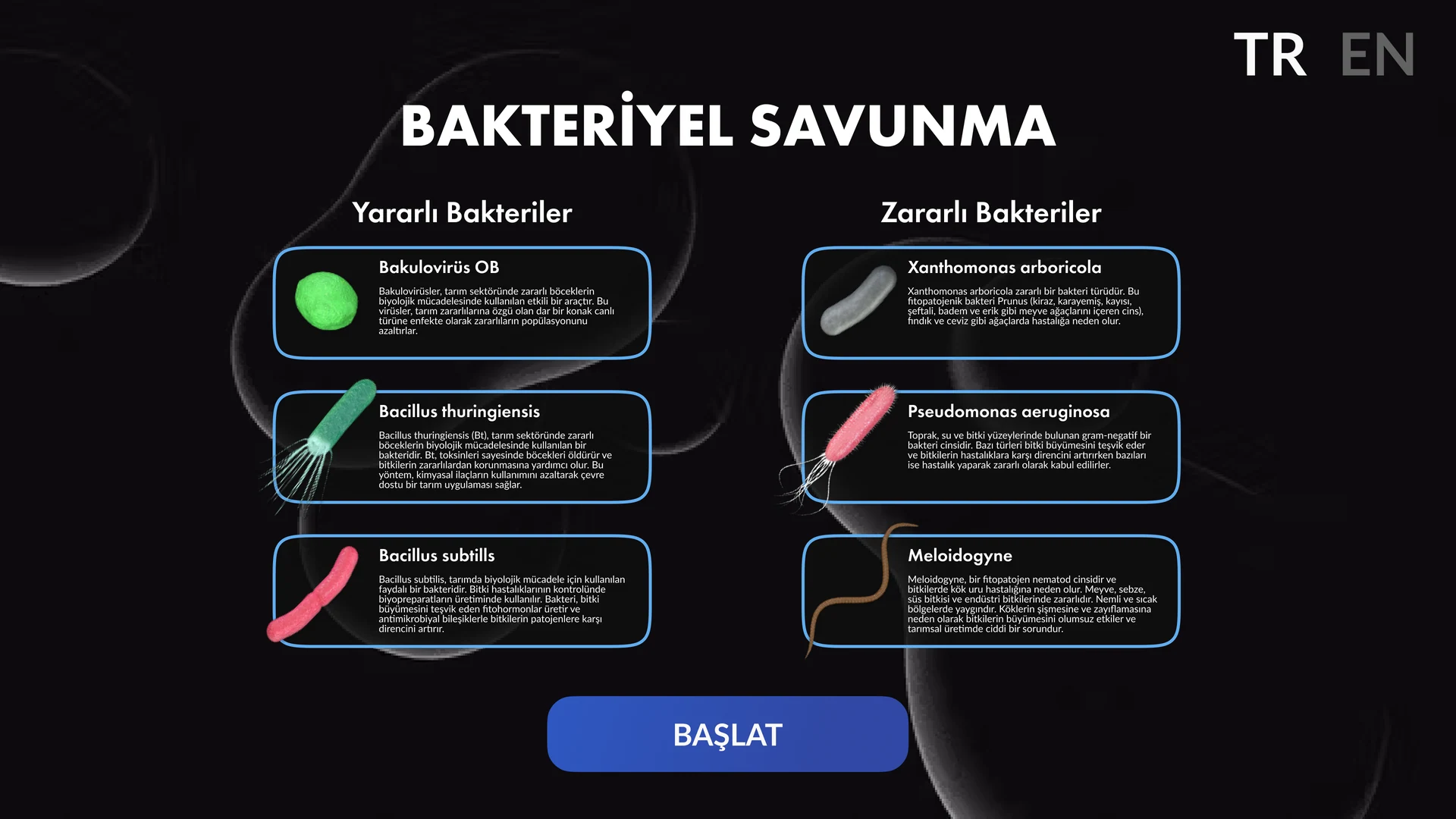
Learning through play.
Video studies of educational games and responsive interfaces, including live bacterial defence gameplay on the museum floor.
Future worlds.
Human wishes.
Two distinct visitor-facing activities: imagining new forms of agriculture, and sending a wish into a Martian world.
Designing what could grow next.
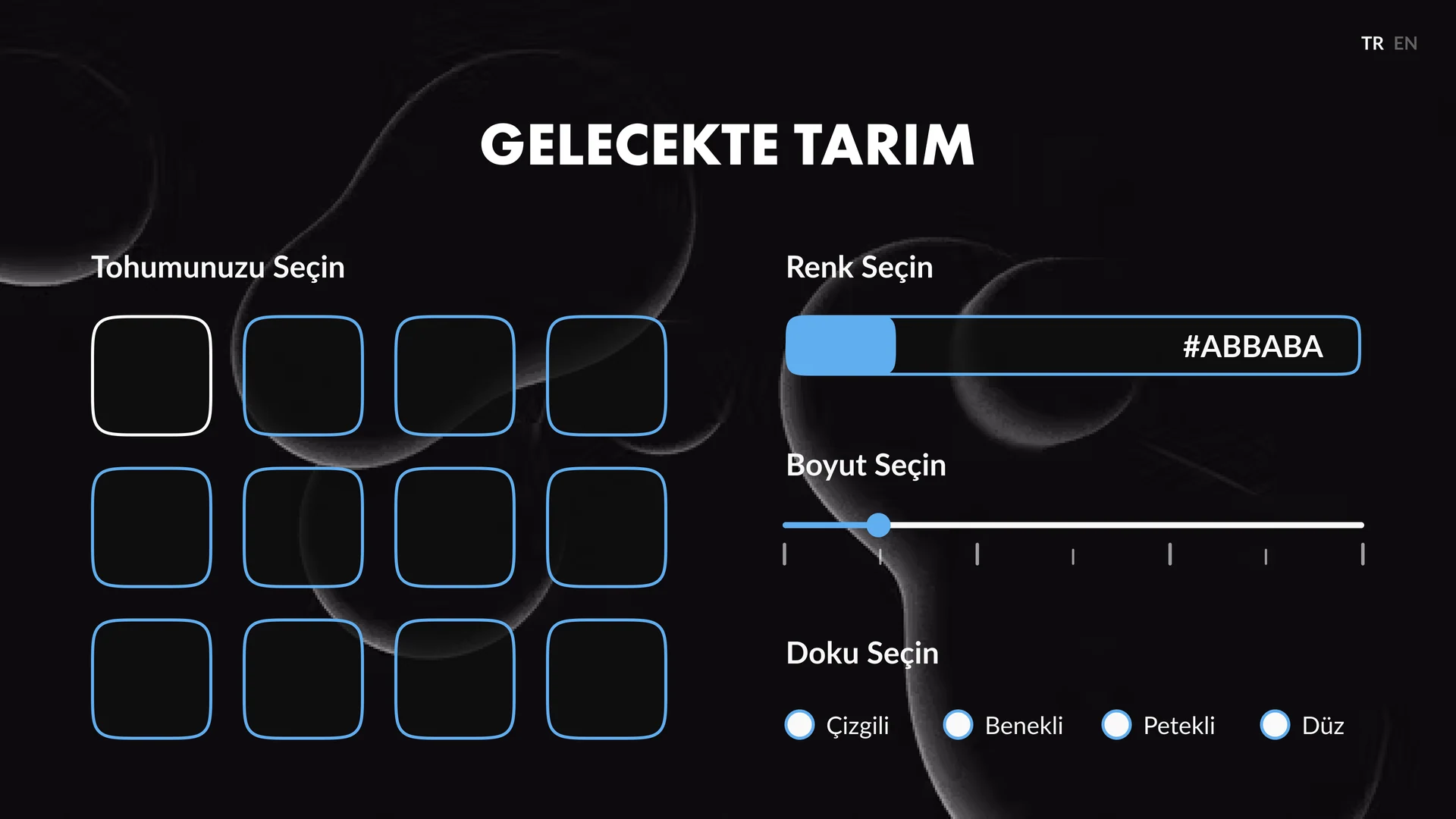
In the Future Farming experience, visitors explore speculative growing concepts through controls for seeds, color, size and texture.
The interface makes an imagined future of agriculture approachable through a clear series of choices.
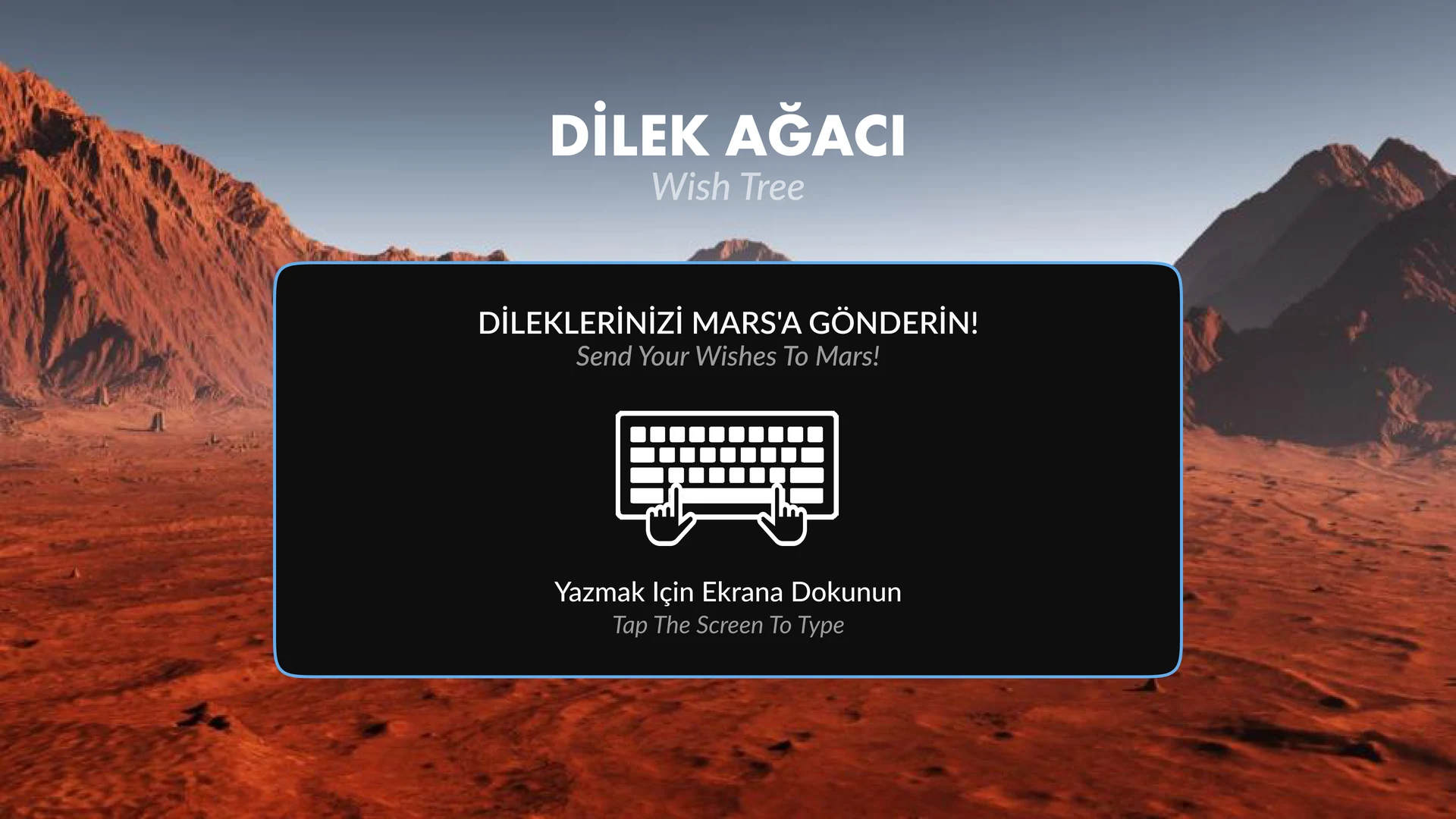
Send a wish to Mars.
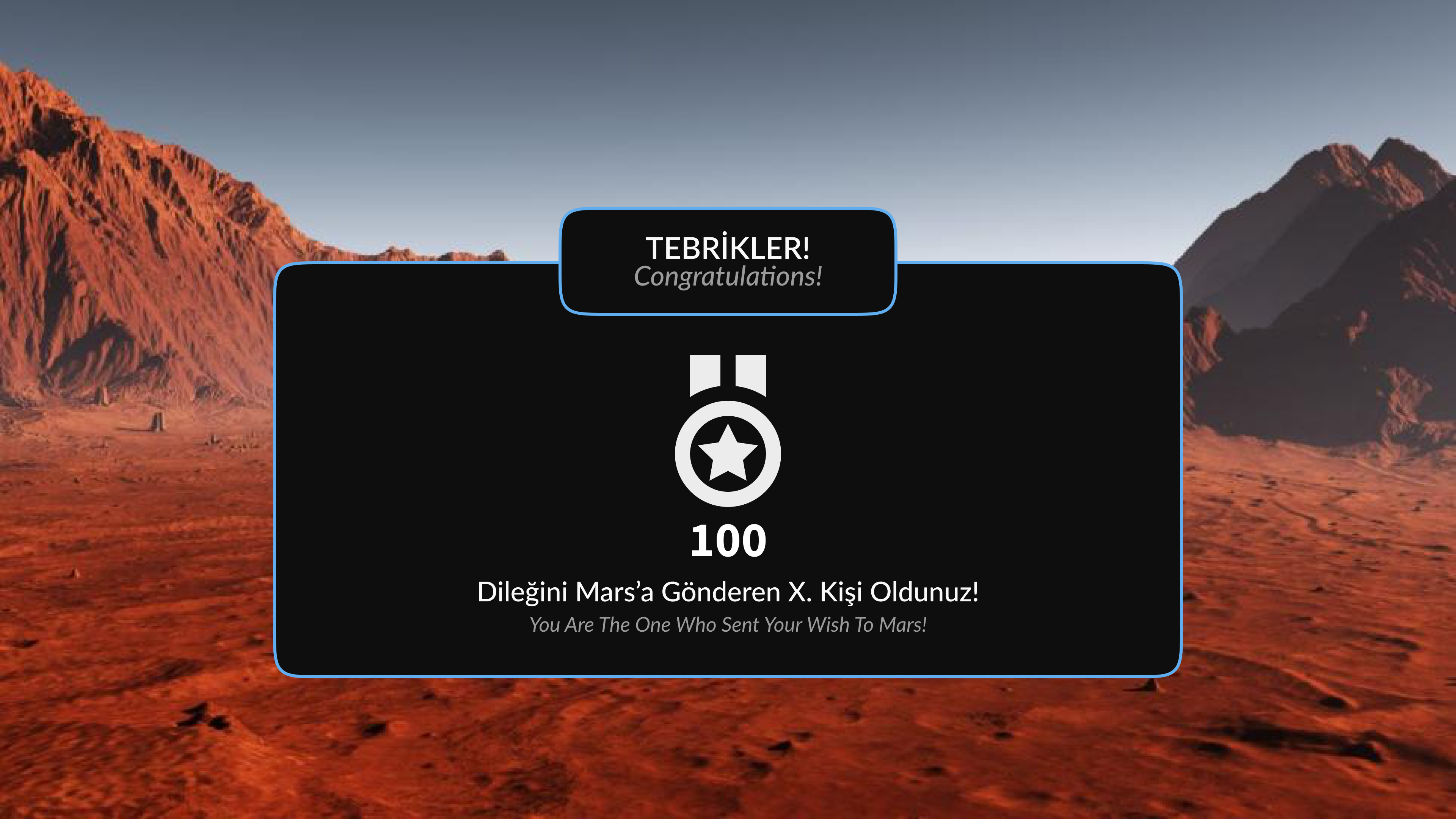
A separate interactive experience invites museum visitors to write a wish against a Martian landscape. The journey begins with a touch-to-type prompt and ends with a confirmation screen acknowledging their contribution and displaying the sender count.
My work included the UI and interaction design, alongside Unity/C# work on the interactive Mars animation within the Reo-Tek museum project.
Unity animation studies.
Two recordings captured from Unity: a Martian environment simulation and an insects animation.
Learning through
the body.
A flight experience designed around simple visitor movement rather than traditional on-screen controls.
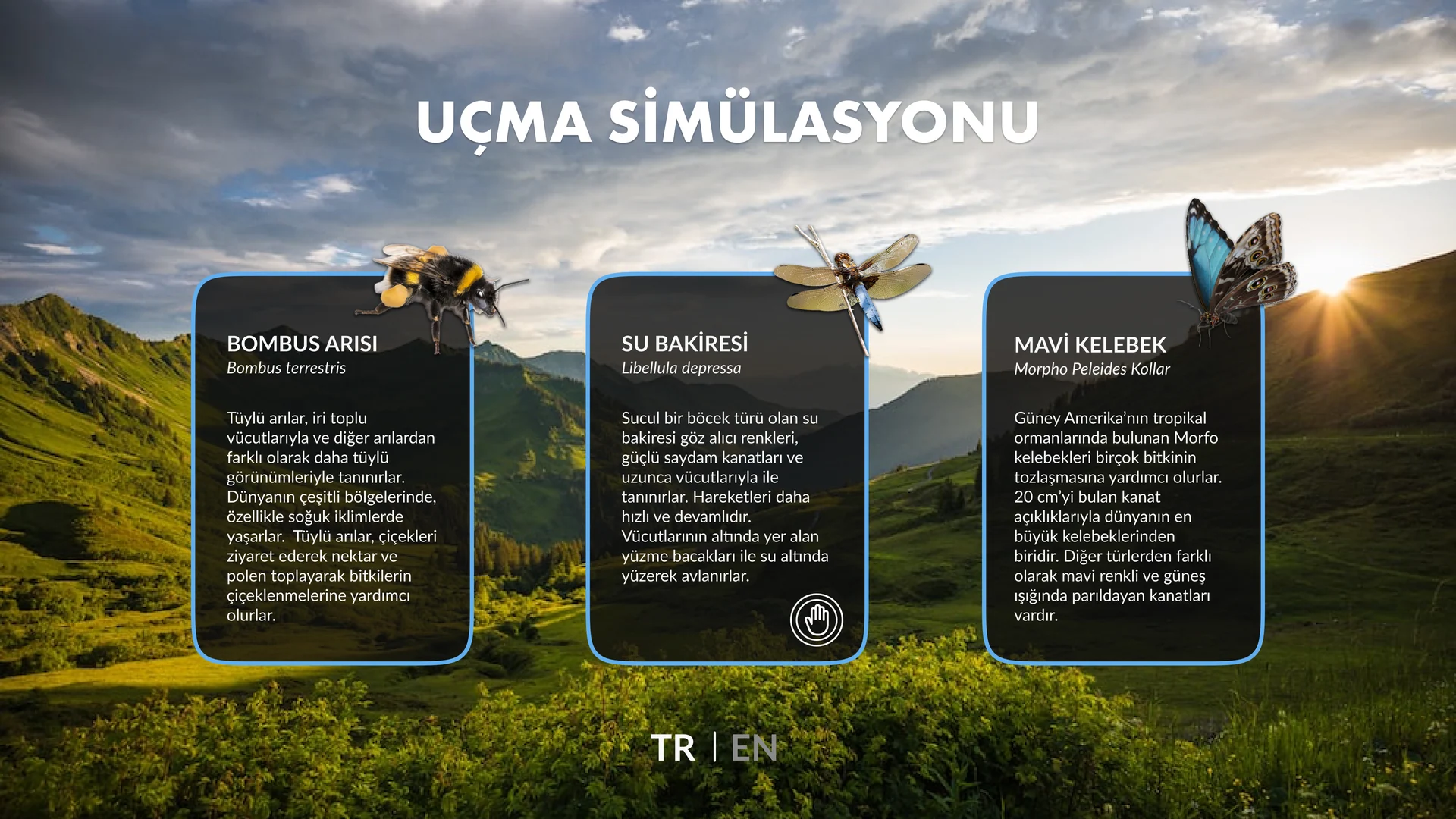
From gesture to flight.
The experience communicates how visitors can lean, turn and change posture to navigate. Large illustrations and concise prompts make the interaction readable before the activity starts.
The interface supports physical participation by explaining the experience in simple visual terms.
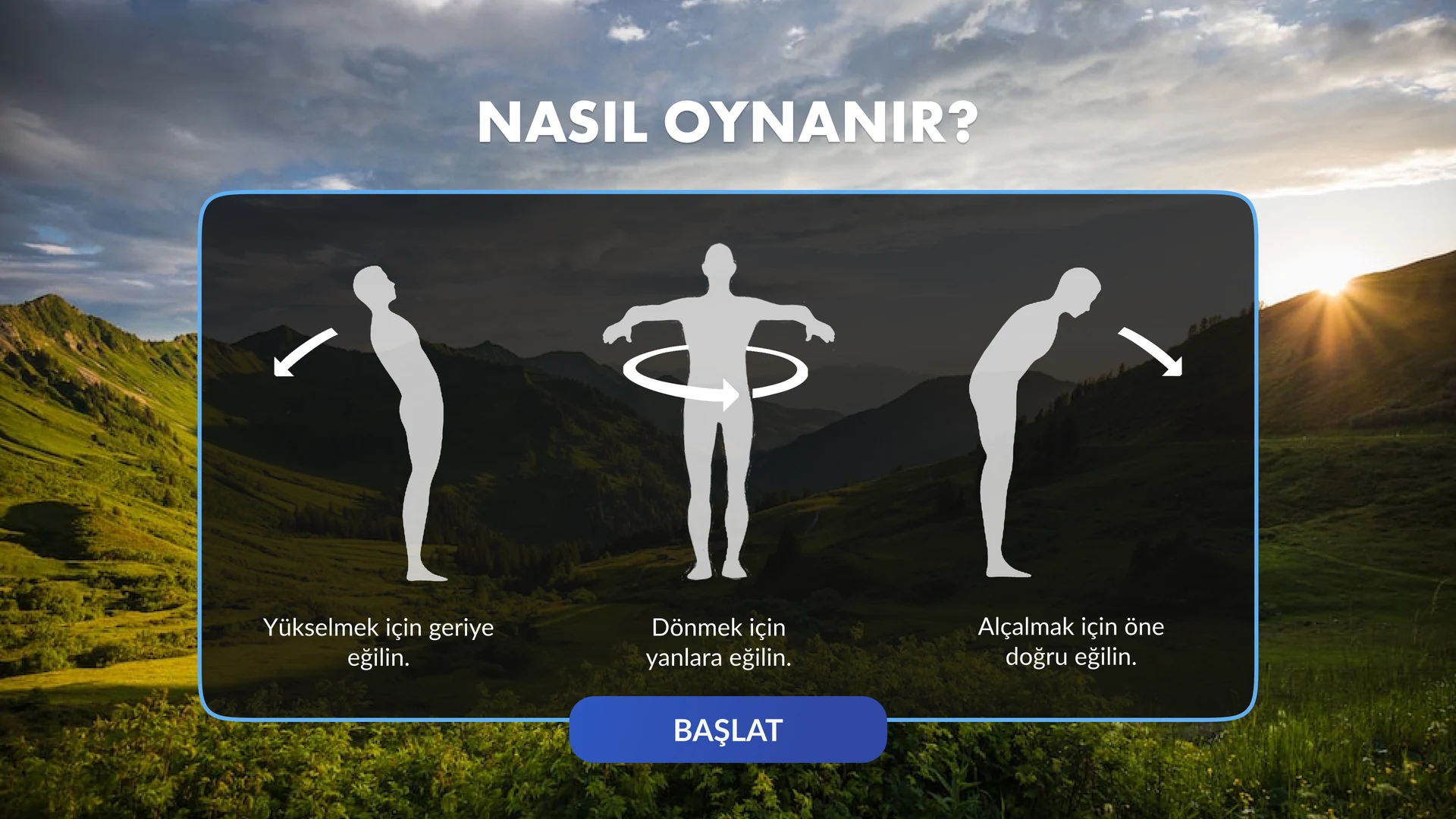
A physical interface.
Additional footage from the interactive experiences shown within the museum.
From the first idea
to the museum floor.
A multidisciplinary role spanning visual concept, digital interactions and real-world delivery.
One experience.
Multiple disciplines.
I worked across the concept, visual design, 3D content, UI and visitor interaction layers, and participated directly in physical installation work.
The result is a body of museum experiences that brings scientific subjects closer to visitors through interaction and play.
- ConceptExperience ideas and visitor-facing narratives.
- UI / UXInformation structure, interactive screens and instructions.
- 3D DesignThree-dimensional work as part of the overall experience production.
- InteractionParticipation methods, prompts and visitor flow.
- Unity / C#Interactive Mars animation and real-time experience work.
- InstallationHands-on participation in on-site setup and delivery.